
Adriene Mishler: The Creator Who Made Yoga Feel Human Again
In this article
Adriene Mishler turned Yoga With Adriene into a global wellness brand — over 13 million subscribers, 1 billion+ views, and a paid membership community spanning 100+ countries. What started as a low-budget experiment in 2012 has become the most trusted name in online yoga — built not on hype or algorithms, but on generosity, consistency, and emotional resonance.
How It All Started
Adriene was an actress and yoga teacher in Austin, Texas when she met filmmaker Chris Sharpe on a film set. Sharpe had already helped build YouTube channels and understood the platform’s mechanics. Together, they launched Yoga With Adriene with a simple premise: free yoga, no pretension, for everyone.
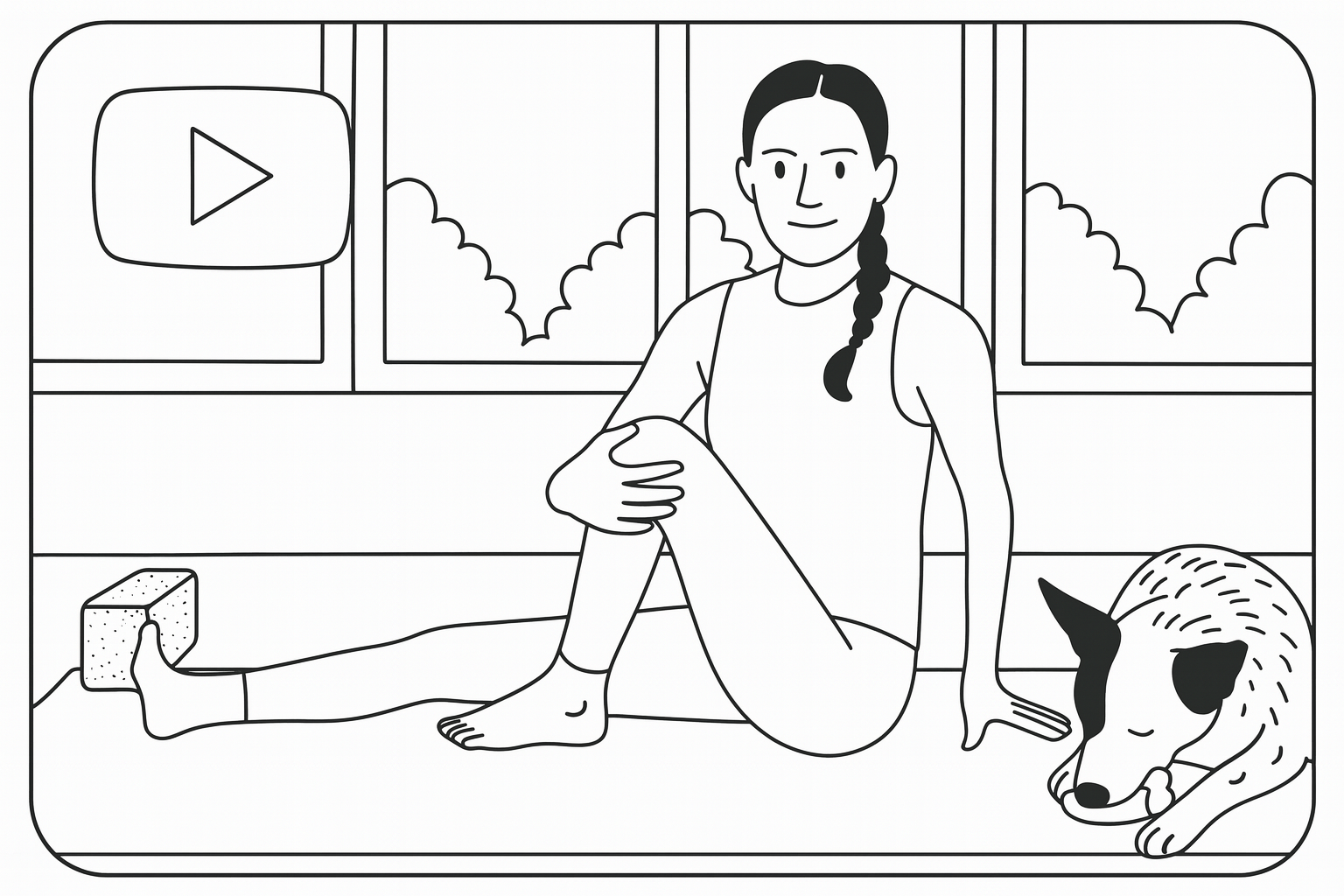
Instead of positioning herself as a “guru,” Adriene framed her channel around accessibility. Early videos were casual, filmed in her living room with her dog Benji nearby. That tone became her brand — intimate, friendly, human.
The early growth wasn’t accidental. Sharpe noticed that most people searched YouTube not for “yoga” but for specific problems: “yoga for back pain,” “yoga for anxiety,” “yoga for beginners.” They built content around these exact search terms — effectively applying *SEO as empathy*. The channel quietly built authority while others chased trends.
The Audience She Attracted
Adriene attracted an audience who didn’t see themselves in the traditional yoga scene — people who felt excluded by the perfection-driven wellness industry. Her fans include:
By blending mindfulness, humor, and vulnerability, Adriene became the internet’s yoga companion — not just an instructor. When the pandemic hit, Yoga With Adriene became a global refuge. Her “Home” series drew tens of millions of views, with daily sessions becoming ritual for isolated viewers.
Early Monetization Moves
For years, Adriene didn’t push monetization. The priority was community first. But as the audience grew, monetization followed naturally:
The Pay What Feels Good experiment alone generated over 50,000 email leads and six-figure revenue while reinforcing her authenticity. She turned generosity into a funnel.
How She Stacked More Offers
Adriene expanded deliberately — every layer built on trust earned through free content.
Each layer solved a need without breaking the trust loop — *free → helpful → deeper access → community.*
The Tactics Behind Her YouTube Success
| Tactic | How Adriene Applied It |
|---|---|
| *Search Intent Mapping* | Built video titles around user phrases like “yoga for anxiety” or “yoga for back pain.” |
| *Humanized Production* | Kept filming in home settings with minimal edits — emotional intimacy > production polish. |
| *Consistency as Ritual* | Weekly uploads + annual 30-day challenges turned viewers into habitual practitioners. |
| *Authenticity as Strategy* | Soft voice, imperfections, and humor disarmed resistance. |
| *Mission-First Branding* | The mantra “Find What Feels Good” positioned her brand around well-being, not body image. |
| *Community Loop* | Free content funneled into paid community, but membership was framed as supporting the mission, not buying access. |
The Flow
YouTube Video → QR/Link to Free Challenge or Calendar → Email Sign-up → Daily Video Series → Gentle Upsell to FWFG Membership → Kula Community Engagement
This Could Be You
If you’re a YouTube creator in any niche:
Lessons for Creators
1. *Authenticity scales when it’s consistent.* Adriene’s tone never changed from 1K to 13M subscribers.
2. *Niche SEO compounds.* “Yoga for…” videos became an evergreen discovery engine.
3. *Community > Campaigns.* Her 30-day challenges are about participation, not sales.
4. *Trust monetizes better than tactics. People joined FWFG because they felt* part of something.
5. *Mission alignment beats algorithms.* Every partnership, product, and video reinforces the same idea — yoga for everybody.